 By admin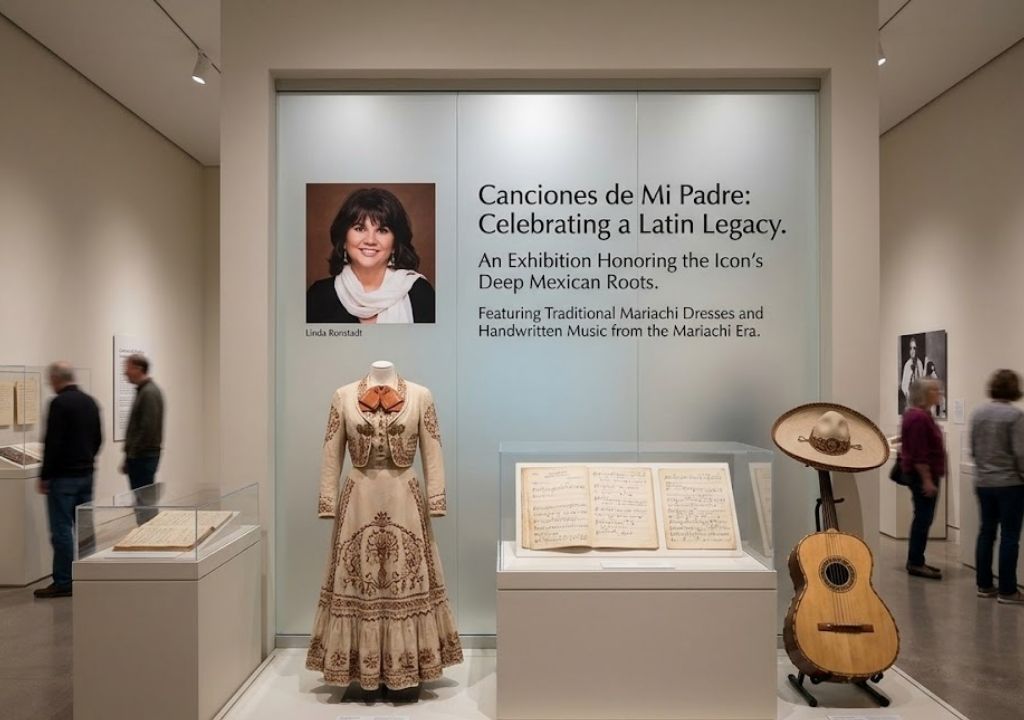
INTRODUCTION
The soft, ambient gallery lighting at the Tucson Museum of Art reflects off the glass cases housing fragile, hand-embroidered traditional Mexican dresses. In 2026, the cultural sanctuary of Arizona has completed a historic, minimalist archival space completely dedicated to the Latin heritage of eleven-time Grammy winner Linda Ronstadt. Titled after her monumental 1987 double-platinum album Canciones de Mi Padre, this pristine exhibition avoids modern digital distractions to focus strictly on the raw physical artifacts of her historic mariachi era. By showcasing authentic handwritten musical scores and rustic stage garments, the museum invites audiences to explore the deep ancestral roots that fueled the biggest-selling non-English album in United States recording history. It stands as a brilliant architectural monument to an icon who shattered commercial boundaries by remaining fiercely loyal to her family’s heritage.
THE DETAILED STORY
To analyze the Tucson Museum of Art’s dedicated Canciones de Mi Padre exhibition requires bypassing standard pop-star nostalgia and examining the rigorous narrative architecture of cultural rebellion. In 1987, Linda Ronstadt stood at the absolute zenith of global commercial music, possessing an unmatched multi-platinum empire built on rock-and-roll anthems and pop standards. When she notified corporate music executives of her intention to record a traditional Mexican mariachi album, the mainstream entertainment machinery resisted, viewing the artistic pivot as a massive financial liability. Yet, Ronstadt’s creative agency was absolute. By collaborating with legendary maestro Rubén Fuentes and integrating elite acoustic ensembles like Mariachi Vargas de Tecalitlán, she engineered a historic acoustic triumph that eventually generated over two and a half million certified sales in the United States alone.
The minimalist design of the new 2026 Tucson installation perfectly honors this uncompromising artistic spirit. Rather than relying on hyper-polished digital displays or interactive video walls, the gallery utilizes an austere, object-focused architecture that allows Ronstadt’s original artifacts to speak for themselves. Visitors are brought into direct, immediate proximity with her authentic hand-embroidered traditional dresses, whose vibrant, raw physical textures remind the public of the physical discipline required for her sweeping theatrical tours. Adjacent to the garments lie her pristine, handwritten musical manuscripts, revealing the precise, methodical intellectual labor she invested to preserve complex traditional arrangements that had historically been relegated to the margins of American media.
By anchoring this exhibition in her desert hometown of Tucson, Arizona, the museum establishes a powerful cross-generational dialogue about identity and artistic sovereignty. Industry journals like Billboard and Variety have long recognized that Canciones de Mi Padre permanently altered American culture by validating Spanish-language art within mainstream society. Today, this dedicated archive ensures that Ronstadt’s multi-generational cultural footprint remains completely insulated from short-term industry trends. It provides an unvarnished masterclass in human resilience, proving that true creative power is sustained not by commercial conformity, but by having the immense courage to return to one’s fundamental roots.