 By admin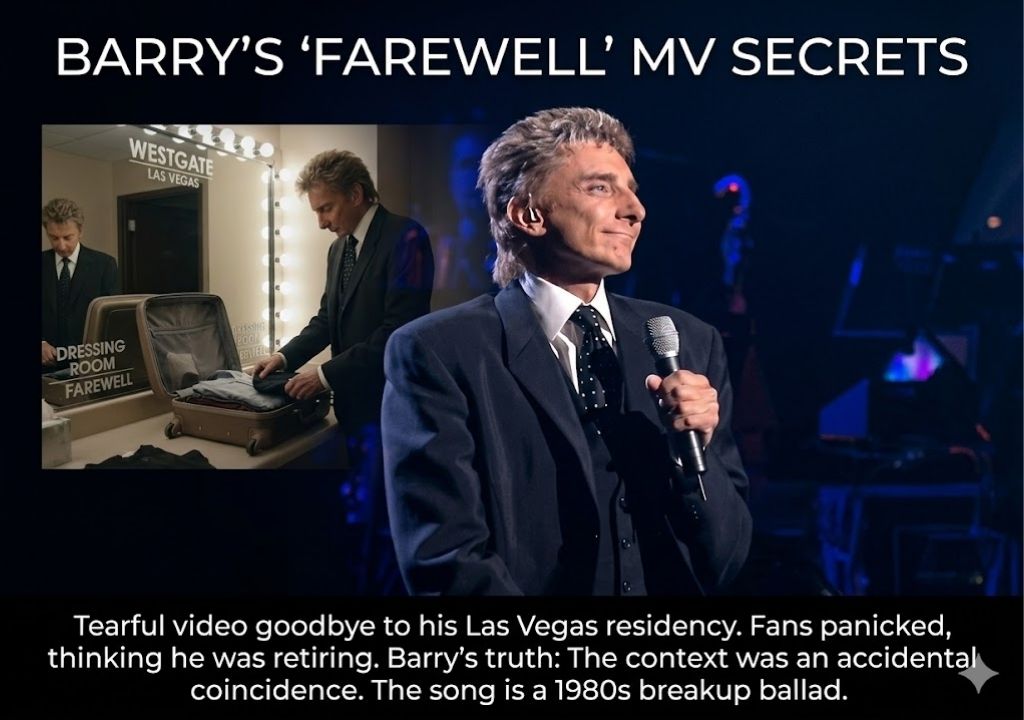
INTRODUCTION
The cinematic framing was deceptively final. In the opening sequences of the music video for his poignant single “Once Before I Go,” Barry Manilow is seen quietly packing away his performance wardrobe, extinguishing the vanity lights, and walking out of his historic dressing room at the Westgate Las Vegas Resort & Casino. For the international legion of devoted fans affectionately known as “Fanilows,” the imagery felt like an unvarnished heartbreak. Across social media platforms and music forums, an immediate wave of collective grief erupted as tens of thousands of listeners interpreted the melancholic, stripped-back visual architecture as an explicit, tearful announcement of the legendary showman’s retirement from the stage. It felt like the definitive closing ceremony of an incomparable, multi-decade touring career. Yet, the profound panic gripping the music industry was entirely built upon a beautiful illusion, misinterpreting a localized creative choice for a permanent final curtain call.
THE DETAILED STORY
The reality behind the melancholic footage, as Manilow himself later revealed with a hearty laugh, stands as a fascinating case study in how visual context can completely hijack narrative intent. Far from mapping out an exit strategy from show business, the iconic singer-songwriter clarified to major music publications that the entire video concept was born purely out of logistical convenience and situational happenstance. The production team required an intimate, authentic setting to capture the raw emotional essence of the track, and the legendary Westgate theater—where Manilow has broken box office records—offered the perfect atmospheric backdrop. Packing up the wardrobe was simply a literal interpretation of leaving a space, not a symbolic farewell to his legendary vocation. Manilow was thoroughly amused by the scale of the misunderstanding, offering reassurance that his passion for live performance remains entirely undiminished.
Furthermore, the thematic truth of “Once Before I Go” diverges entirely from the contemporary retirement narrative. Manilow disclosed that the deeply moving, acoustic-driven ballad is actually a historical artifact from his extensive creative archive, originally conceptualized and written in the mid-1980s. Rather than addressing his modern-day relationship with his audience or his stage career, the lyrics paint an intimate portrait of a devastating, fractured romance from that vibrant decade. The composition dissects the universal ache of a final, lingering encounter between two lovers before their paths permanently diverge. By setting this decades-old narrative of romantic closure within his modern Las Vegas sanctuary, Manilow inadvertently created a powerful cross-generational mirror. This revelation offers a refreshing perspective on his ongoing artistic journey, proving that instead of winding down, Manilow is actively revitalizing his rich creative history. For the relieved “Fanilows,” the song is no longer a somber valedictory address, but a masterfully executed piece of musical storytelling that underscores his enduring vitality and unparalleled ability to convert personal history into timeless, universal art. Ultimately, this vibrant creative chapter serves as definitive proof that his musical journey is far from over.