 By admin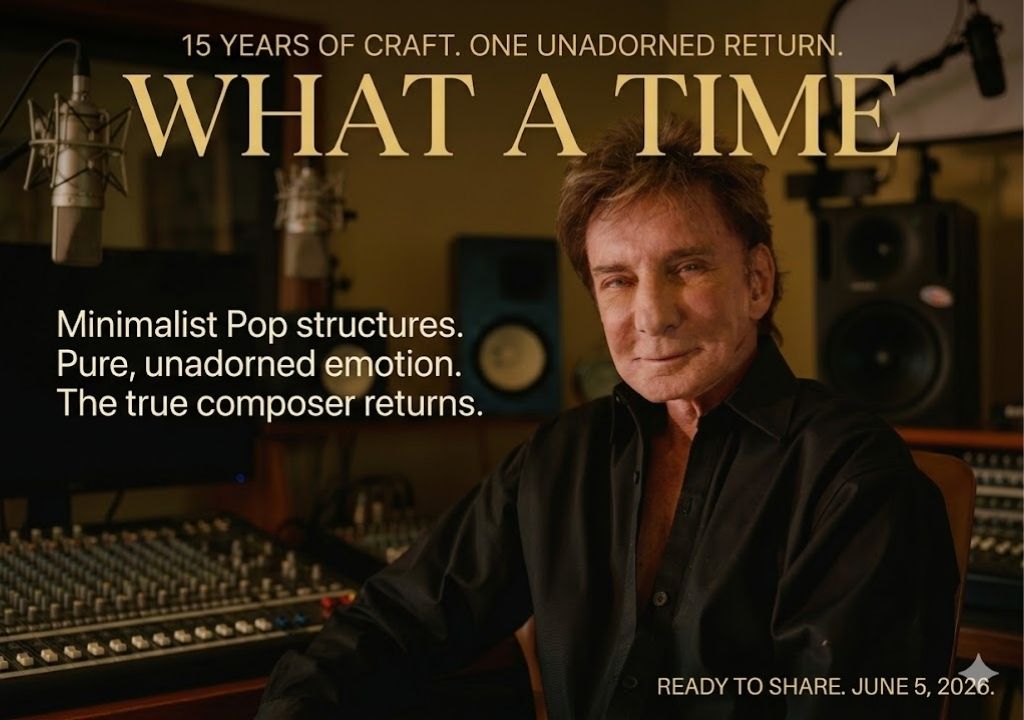
INTRODUCTION
For nearly fifteen years, the grand architectural pop arrangements that cemented Barry Manilow as Billboard’s undisputed number one Adult Contemporary artist of all time remained neatly filed away in his California archives. While his record-breaking Westgate Las Vegas residency continued to draw packed houses with neon spectacles and massive choral harmonies, a quiet craving lingered among music purists for the unvarnished core of his historic musicianship. On June 05, 2026, that profound silence will finally be broken. The imminent arrival of his thirty-third studio album, What A Time, has ignited an intense global countdown among Western music critics. Rather than leaning into the dazzling, maximalist production that characterized his multi-platinum peak, this forthcoming collection represents a deliberate, stunning retreat into the naked beauty of fundamental songwriting, presenting the legendary composer in his most emotionally exposed and vulnerable state.
THE DETAILED STORY
The critical discourse surrounding What A Time centers on an audacious aesthetic pivot. For an icon who built an $85 million empire on soaring key changes and theatrical crescendos, stripping away the sonic armor is a high-stakes gamble. Yet, reports from Billboard and Variety confirm that this 13-track offering deliberately bypasses the safety of nostalgia. Instead, Manilow has engineered an exquisite stylistic synthesis by uniting a cross-generational assembly of elite collaborators. From the meticulous contemporary R&B textures of Kenneth “Babyface” Edmonds to the roots-driven, organic honesty of nine-time Grammy winner Dave Cobb, the album purposefully reframes Manilow’s signature melodic grandeur. Longtime co-writers Bruce Sussman and Adrienne Anderson return to provide lyrical gravity, ensuring that the project maintains a profound literary weight. It is an intentional subversion of industry expectations; at a moment when legacy artists routinely rely on safe cover albums, Manilow is delivering a bold manifesto of original prose and naked emotionalism.
The sonic architecture of the album relies heavily on minimalist pop structures that prioritize the raw narrative voice over electronic embellishments. Advance singles like “Once Before I Go”—executive produced by Clive Davis—already demonstrate this breathtaking clarity, pairing sweeping, deliberate string arrangements with an unhurried vocal command that stretches back to his 1974 breakthrough hit “Mandy.” Industry insiders note that by stripping the tracks down to their essential skeletal forms, Manilow forces the listener to confront the raw mechanics of his storytelling. The narrative arc of the LP reads like an intimate journal, exploring the spaces between nostalgia, temporal passage, and hard-won resilience. As the global music community counts down to the official June 05, 2026 street date, the cultural implications of What A Time extend far beyond mere chart longevity. It stands as a definitive thesis on artistic survival, proving that a master craftsman does not require the shield of massive orchestration to command an audience, but merely the courage to let a single, perfect melody speak entirely for itself.