 By admin
INTRODUCTION
THE DETAILED STORY
In the competitive landscapes of contemporary audio restoration, legacy catalogs are frequently subjected to aggressive brickwall limiting and digital enhancement that strips vintage recordings of their natural room acoustics. However, BGO Records has deliberately rejected these modern engineering trends for their landmark 2026 reissue. The core architectural philosophy governing The Decca A’s and B’s 1959 to 1966 relies on a strictly minimalist mastering process. New audio restoration engineers returned to the original master tapes from the Decca vaults, choosing to systematically polish out surface anomalies without altering the authentic warmth and dynamic frequency range inherent to the original mono and early stereo cuts. This careful treatment ensures that the distinctive physical textures of the 1950s and 1960s magnetic tape—including the robust low-end punch of the double bass and the crisp, immediate bite of the backing guitars—remain completely uncompromised for modern sound systems.
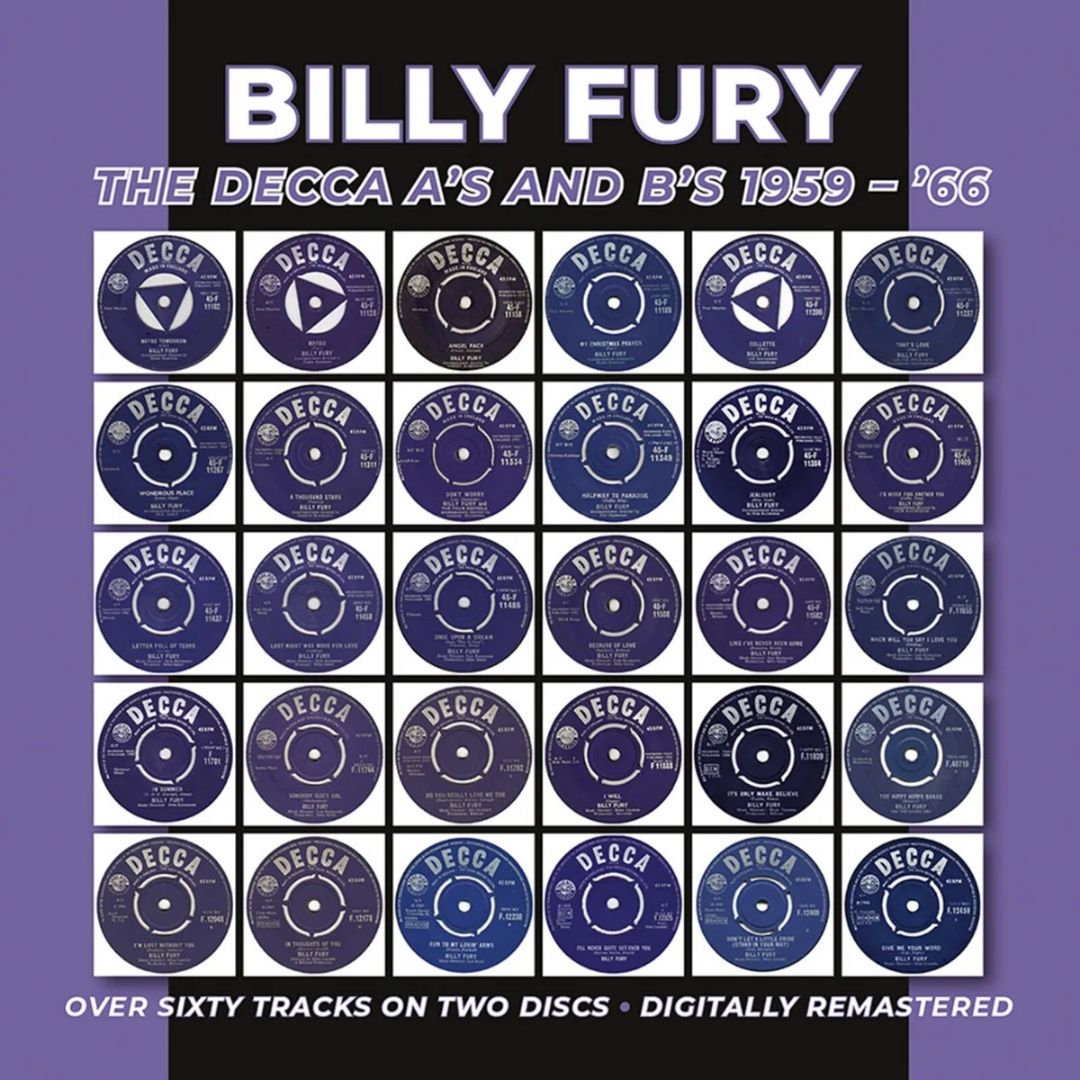
Spanning a comprehensive double-disc configuration, the 62-track set reconstructs Fury’s trajectory with rigorous chronological fidelity. Unlike his contemporaries who frequently relied on cover versions of American hits, Billy Fury stood as a distinct creative force in the British music industry, actively composing his own material during an era dominated by calculated studio svengalis. The anthology expertly guides listeners through this artistic evolution, beginning with his raw, self-penned 1959 debut single “Maybe Tomorrow” and moving seamlessly through his legendary run of top-tier hits, including the timeless “Wondrous Place” and his massive signature cover of Tony Orlando’s “Halfway To Paradise.” This meticulous sequential layout offers an invaluable historical window, mapping out how Fury’s dark, sultry vocal identity dominated the UK charts before the historic British Invasion spearheaded by fellow Liverpudlians The Beatles permanently shifted the industry’s focus. By rendering these rare single versions accessible in their purest sonic form, BGO Records provides a vital document that re-establishes Fury not merely as a tragic teen idol, but as a formidable, highly influential architect of early European rock history.