 By admin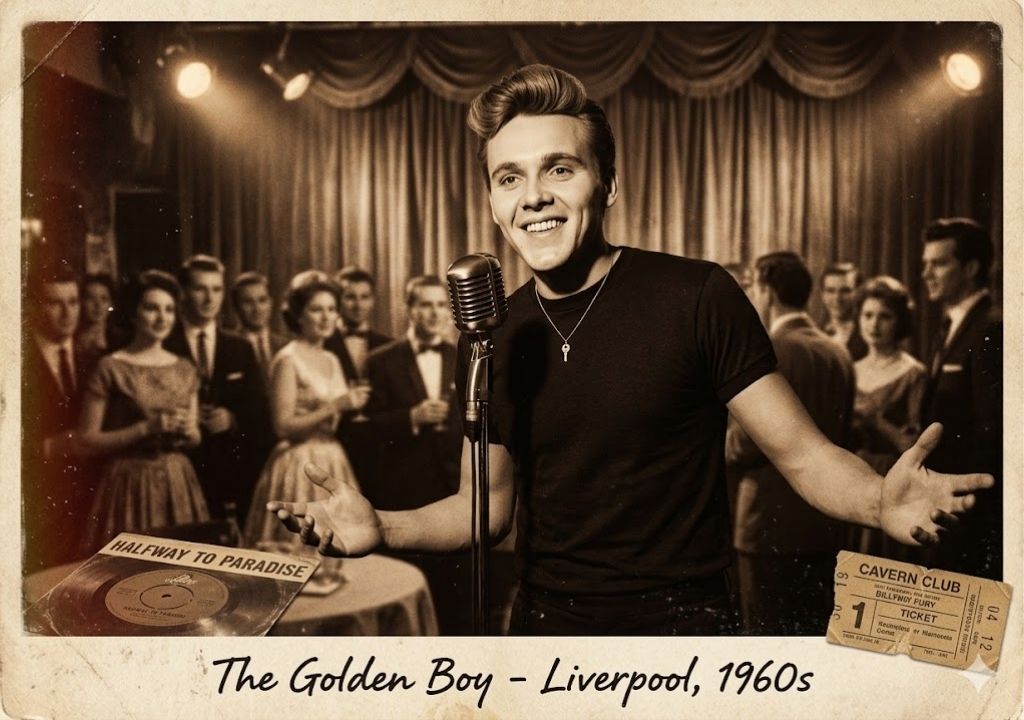
INTRODUCTION
On a cool evening in October 1958, a nineteen-year-old deckhand named Ronald Wycherley stepped off the Liverpool ferry, clutching a collection of handwritten, self-composed songs. Having spent his days hauling heavy cargo along the industrial docks, Wycherley had no intentions of chasing international stardom. His singular, humble mission that night at the Essoldo Theatre was to slip his raw compositions into the hands of British rock icon Marty Wilde. Instead, fate intervened in the form of Larry Parnes, the United Kingdom’s most formidable talent manager. Mesmerized by the young man’s immediate presence, Parnes forced the nervous laborer directly underneath the stage spotlights that very evening. This single, impulsive decision completely bypassed the traditional corridors of industry apprenticeship, triggering the sudden, permanent birth of an iconic musical titan.
THE DETAILED STORY
The historical transition from Ronald Wycherley to Billy Fury remains one of the most thoroughly analyzed anomalies in mid-century entertainment archives. When Larry Parnes, a brilliant architect of the early British pop landscape, agreed to listen to the trembling dock worker backstage, he expected the standard, derivative rock-and-roll imitations of the era. Instead, as Wycherley began to perform his original material, Parnes was instantly struck by a profound, haunting emotional authenticity. The young Liverpudlian possessed a striking, vulnerable vocal architecture that blended traditional rhythm and blues with an intense, cinematic melancholy. Recognizing an unprecedented market disruption, Parnes made an audacious operational gamble. He refused to let Wycherley return to the docks, ordering him to perform live in front of a packed theater audience just minutes later.
The crowd’s instantaneous, near-hysterical reaction vindicated Parnes’ instinct, establishing a template for modern celebrity manufacturing. To complete this cultural transformation, Parnes stripped away the artist’s blue-collar moniker, christening him “Billy Fury”—a calculated name designed to project an alluring duality of sensitive youth and volatile rock-and-roll energy. While history books often characterize Parnes as a ruthless corporate svengali who controlled an $85,000 entertainment stable, his structural handling of Fury revealed a genuine respect for the young man’s organic songwriting capabilities. Unlike his contemporaries, who relied heavily on safe, American cover tracks, Fury’s early catalog consisted primarily of his own introspective prose, a rare artistic autonomy that Billboard and Variety would later recognize as highly influential.
By fusing Wycherley’s raw, authentic suffering with Parnes’ sharp marketing instincts, the duo permanently altered the trajectory of the UK charts. This pivotal 1958 encounter proved that real creative power does not require extensive polish or institutional approval. Instead, true genius requires only a single moment of unvarnished exposure to redefine the cultural landscape forever, anchoring Fury as a permanent pillar of early rock-and-roll history.