 By admin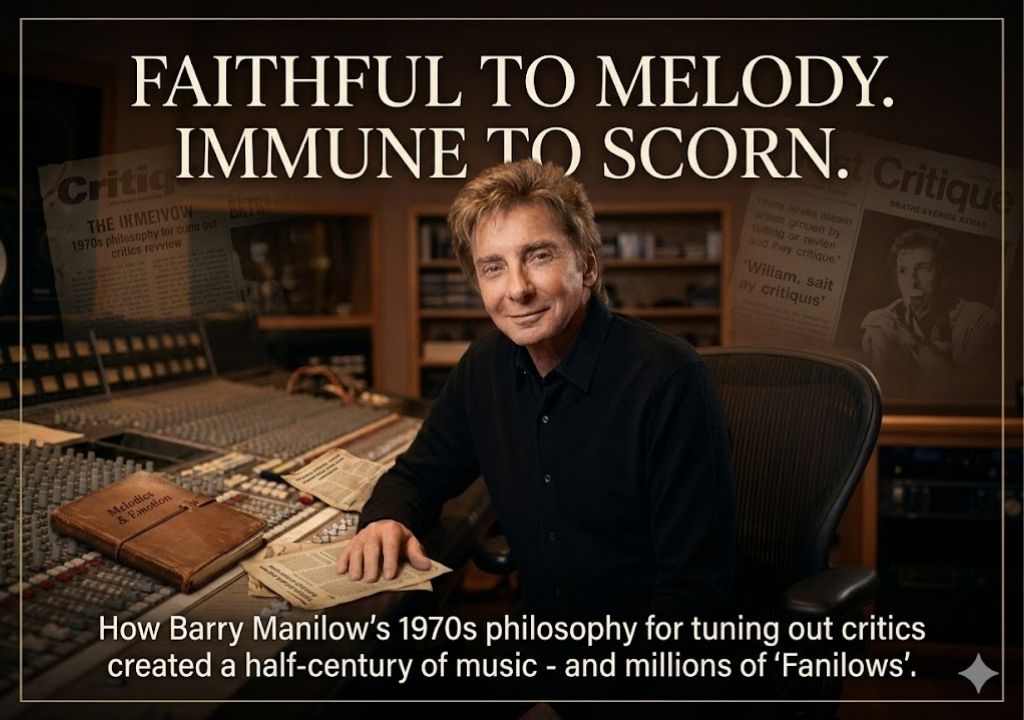
INTRODUCTION
In the mid-1970s, Barry Manilow achieved an unprecedented cultural paradox. While his soaring anthems continuously dominated the Billboard Hot 100, generating millions in retail revenue, a fierce contingency of mainstream music journalists targeted him with relentless aesthetic ridicule. High-brow publications routinely dismissed his lush, emotional arrangements as saccharine sentimentality, attempting to delegitimize his staggering commercial appeal. Yet, standing beneath the global spotlight for over half a century into 2026, the legendary singer-songwriter reveals that these scathing historical reviews never fractured his foundational artistic philosophy. Instead of altering his sonic architecture to appease elite curators, Manilow anchored his career in a steadfast commitment to pure, unadorned melody. This deliberate defiance of critical trends did not just protect his creative integrity; it established an unbreakable, generational bond with a fiercely devoted global audience that remains utterly unbothered by the dictates of elite musical tastemakers.
THE DETAILED STORY
To understand Manilow’s enduring footprint in American entertainment requires bypassing the superficial elite commentary of the 1970s and examining his rigorous structural philosophy. During an era when rock critics demanded dark cynicism or avant-garde experimentation, Manilow deliberately weaponized accessible pop craft. He recognized that while critical trends operate on a cycle of artificial intellectualism, human emotion responds to structural harmonic clarity. Industry archives from Variety and Billboard document that his multi-platinum masterpieces, from “Mandy” to “I Write the Songs,” were meticulously engineered around classic songwriting principles that prioritize emotional resonance over industry approval. This unyielding artistic discipline formed an impenetrable shield against contemporary media hostility. Manilow understood that reviews are ephemeral, published at a specific time, whereas a beautifully realized melodic hook possesses a timeless permanence.
This philosophical fortitude yielded unprecedented long-term dividends, manifesting in the global phenomenon of the “Fanilows.” By remaining fiercely authentic to his emotional instincts, Manilow created a safe sanctuary for listeners who craved unvarnished joy and sincere vulnerability. This multi-generational collective grew into an economic and cultural powerhouse, consistently selling out international arenas and sustaining his historic residency at the Westgate Las Vegas Resort & Casino. As the industry navigates 2026, the wisdom of Manilow’s structural isolation from critical trends is undeniably clear. While the cynical publications that once mocked his work have largely faded or transitioned through structural upheavals, Manilow’s catalog continues to generate massive streaming numbers and cultural reverence. His upcoming minimalist studio album, What A Time, scheduled for a June 05, 2026 release, serves as the ultimate validation of this fifty-year trajectory. By completely ignoring the elite tastemakers of the 1970s, Manilow preserved the raw, fundamental soul of his artistry. He proved that an unwavering devotion to the audience’s emotional reality is the ultimate architectural blueprint for a permanent, historically vindicated musical legacy that entirely outlived its loudest detractors.