 By admin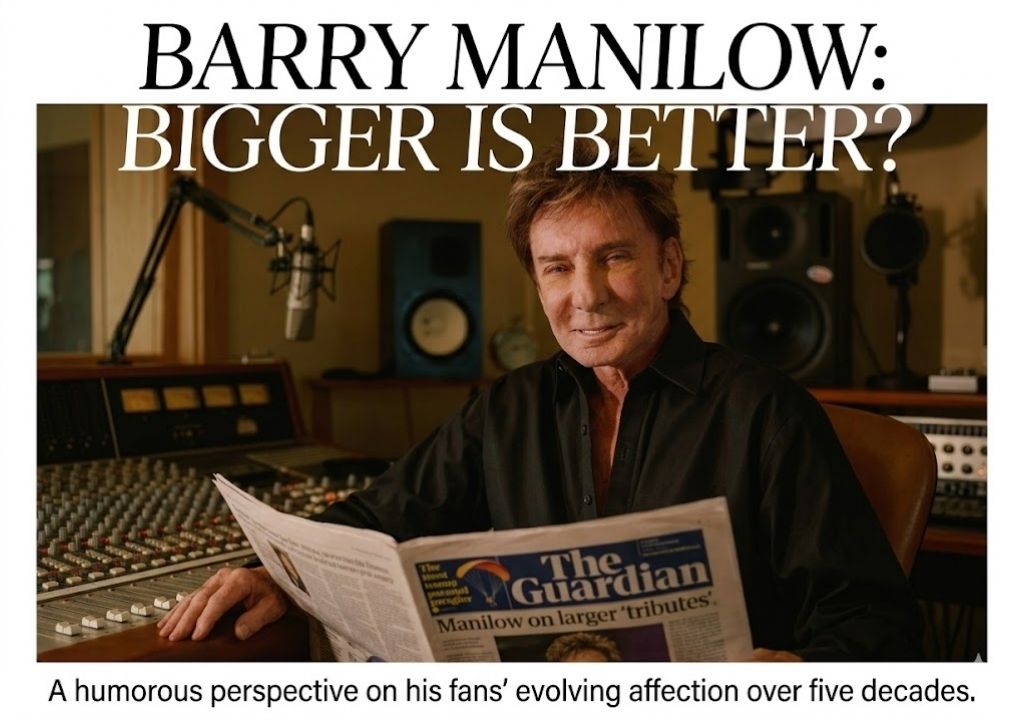
INTRODUCTION
For more than half a century, the relationship between Barry Manilow and his multi-generational audience has been defined by a unique brand of fervent adoration. During the height of his 1970s chart-topping dominance, the stage at any given Manilow concert was routinely showered with intimate garments—a visceral, albeit standard, tribute from infatuated fans. Yet, as the music industry navigates 2026, the legendary showman has reframed this historical phenomenon with a refreshing, self-deprecating perspective. In a recent, candid reflection published by The Guardian, Manilow openly contrasted the delicate tokens of his youth with the current offerings thrown by his aging “Fanilows,” jokingly comparing modern undergarments to giant paragliders. Far from a mere superficial joke, this unvarnished humor serves as a profound indicator of his indomitable spirit, signaling an enduring psychological vitality that remains entirely untouched by his recent, highly publicized medical battles.
THE DETAILED STORY
To view Barry Manilow’s comedic observations through a purely superficial lens would be an analytical failure. Within the sophisticated pages of contemporary entertainment journalism, an artist’s capacity for raw, unfiltered humor frequently serves as the truest metric of psychological equilibrium, especially following a severe health crisis. Manilow’s lighthearted remarks regarding the evolving scale of fan adoration offer a fascinating masterclass in emotional grounding. By openly laughing at the physical realities of time—both his own and that of his dedicated audience—the iconic performer strips away the clinical solemnity that often shrouds legacy musicians who have recently confronted life-threatening diagnoses, such as his fiercely fought battle with lung cancer.
This display of candid wit provides a crucial window into Manilow’s ongoing artistic rejuvenation. For decades, the pressures of maintaining an unblemished pop persona across an $85 million empire could easily induce a rigid hyper-vigilance. Yet, Manilow’s current dialogue reveals an executive clarity that prioritizes absolute authenticity over manufactured mystique. His comparison of contemporary stage offerings to aviation equipment is more than a witty soundbite; it is a profound declaration of survival. It demonstrates that the singer has effectively neutralized the existential dread of illness by anchoring himself in the joyful, absurd realities of live performance.
Major industry commentators from Billboard and Variety have noted that this psychological resilience directly fuels his unprecedented artistic stamina, particularly as he prepares for the June 05, 2026 release of his minimalist studio album, What A Time. Instead of retreating into a protective isolation, Manilow uses sharp, grounding humor as an intellectual shield against the vulnerability of aging. Ultimately, this unfiltered connection with his past and present proves that his enduring legacy is sustained not merely by vocal mechanics or grand orchestrations, but by an unbreakable, joyful spirit that transforms the heavy burdens of historical trauma into a light, triumphant celebration of life.