 By admin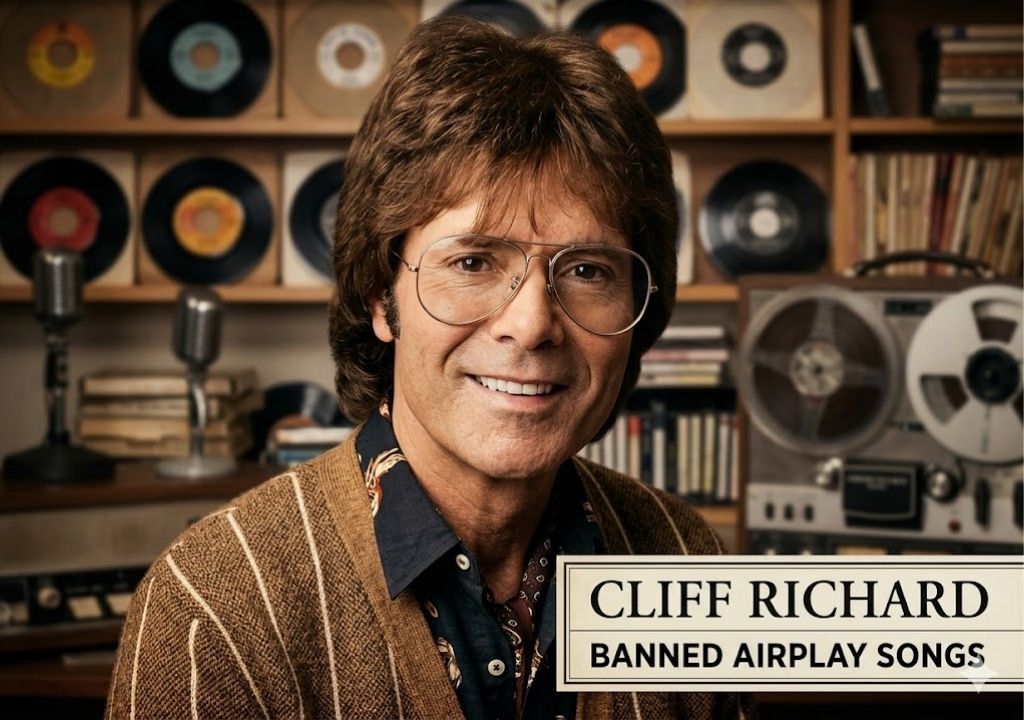
INTRODUCTION
In the late autumn of 1999, executives inside the British Broadcasting Corporation executed an unprecedented corporate blackout. Sir Cliff Richard, a pop titan who had shared chart real estate with Elvis Presley across five consecutive decades, suddenly found his latest record completely purged from the nation’s premier airwaves. The track, a bold fusion of the Lord’s Prayer to the melody of ‘Auld Lang Syne’ entitled ‘The Millennium Prayer,’ was deemed structurally incompatible with modern brand identities. This was not an isolated creative critique; it was an institutional declaration that one of the most successful artists in British history was officially persona non grata on the radio. The institutional rejection sparked a fierce cultural standoff across the Atlantic and throughout the United Kingdom, revealing the deep, invisible mechanics of media gatekeeping and the raw power of grass-roots pop fandom.
THE DETAILED STORY
The media blacklisting of Sir Cliff Richard represents one of the most intriguing chapters in modern broadcasting history. The corporate strategy to exclude his work became public when major conglomerates quietly enacted policies designed to curate a younger, hyper-commercialized demographic. By 1998, radio programmers openly acknowledged an unofficial embargo, explicitly stating that Richard’s music no longer aligned with their contemporary brand values. To bypass this algorithmic and systemic wall, Richard and his production team resorted to clandestine tactics. In late 1998, they distributed a white-label, heavily remixed dance track titled “Can’t Keep This Feeling In” to over 240 radio stations under the opaque pseudonym “Blacknight.” Unaware of the legacy artist behind the microphone, unsuspecting program directors quickly added the track to their high-rotation playlists. The revelation that “Blacknight” was indeed the legendary pop institution exposed the superficial nature of demographic gatekeeping.
The battle reached its zenith with the release of “The Millennium Prayer.” Despite a near-universal institutional media blackout, the record-buying public staged a massive counter-offensive. Distributed by an independent label after being rejected by major distributors, the single defied the corporate media ban, selling over one million copies and triumphantly ascending to the Number 1 spot on the official UK singles chart on 11/28/1999. This dramatic triumph proved that audience loyalty could completely overpower corporate curatorial control. However, the industry resistance persisted well into the next decade. On 11/15/2011, networks like Absolute Radio 60s officially barred his entire catalogue from their launch playlists, claiming his classic material did not fit the curated “cool sound” of the era. Rather than diminishing his stature, these corporate boycotts merely highlighted Richard’s enduring market viability. Across his legendary career, which includes generating millions in global revenue and selling out stadium tours, Richard’s triumphs over institutional blacklists illustrate a profound truth about the music industry: a genuine connection with an audience is a currency that corporate policy simply cannot devalue.